

Split-Horizon DNS for a Home Lab VPN
Make jellyfin.home.example.com resolve to a LAN IP at home and over WireGuard or Tailscale, and to your public IP elsewhere. Unbound and AdGuard Home configs.
All the articles with the tag "vpn".
Make jellyfin.home.example.com resolve to a LAN IP at home and over WireGuard or Tailscale, and to your public IP elsewhere. Unbound and AdGuard Home configs.

Route specific Docker containers through Mullvad VPN via Gluetun, keeping Plex and everything else on your home WAN. No iptables nightmares, no tunneling drama.

wg-easy gives WireGuard a web UI: create clients, scan QR codes, see traffic stats, no SSH required. Self-hosted VPN made actually easy.

Encryption hides content, not shape. Here's why state-level censors don't read your VPN traffic, they recognize it, and what actually still works in 2026.

Run a single k3s cluster spanning two physical sites using Tailscale as the WireGuard fabric, home lab server plus cloud VPS, one single kubectl context.

Tailscale vs Nebula vs ZeroTier vs NetBird, honest comparison of mesh VPN options for homelabs, small teams, and self-hosters in 2026.

OpenConnect replaces the bloated AnyConnect client on Linux. Run ocserv for a self-hosted Cisco-compatible VPN server, no 200MB installer required.

Pipe ZFS incremental snapshots through WireGuard to a friend's NAS or a remote VPS. Encrypted in transit and at rest, no rsync.net bill or vendor lock-in.
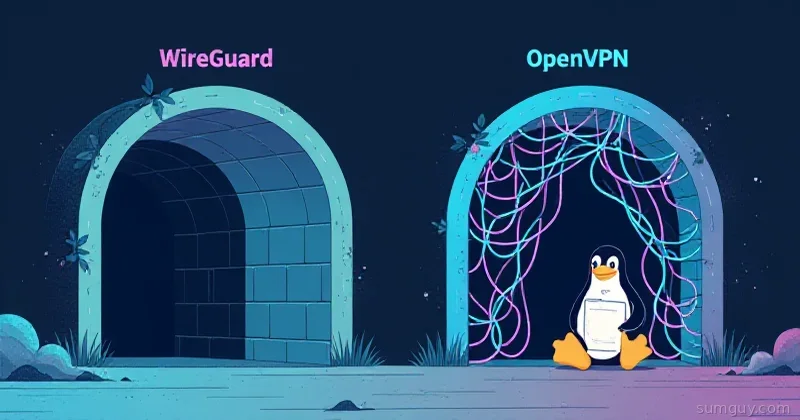
OpenVPN is the battle-tested workhorse. WireGuard is everything VPNs should have been from the start. In 2026, here's which one you should actually use.

Apply zero-trust principles to your home lab, network segmentation, VLANs, identity-aware proxies, and Tailscale as the glue.
You turned the VPN on and half your traffic still leaves over the normal route. How VPN routing works, reading the routing table, and forcing all traffic.

Set up a WireGuard VPN kill switch and prevent DNS leaks on Linux. Practical iptables rules, resolv.conf locking, and systemd-resolved config.