

Database Connection Storms, Explained
Why apps fall over under load: pool size times replicas versus Postgres max_connections, restart herds, retry storms, timeouts, and the configs that fix them.
All the articles with the tag "performance".
Why apps fall over under load: pool size times replicas versus Postgres max_connections, restart herds, retry storms, timeouts, and the configs that fix them.

zstd -3 compresses 4 to 6x faster than gzip -6 with smaller files. At the top end, xz -6 beat zstd -19 on speed. 19 configs, 4 public data sets, measured.

Stop watching osm2pgsql crawl. Tune flex output, slim mode, --cache, and Postgres for OSM imports on hardware that isn't a hyperscaler.

ZFS tuning for flash: ARC sizing, recordsize, autotrim, sync modes, and SLOG advice, plus why defaults written for spinning disks waste an NVMe pool.

PREEMPT_RT hit Linux mainline in 2024. Here's what real-time actually means, when you need it, and when it'll just slow you down.
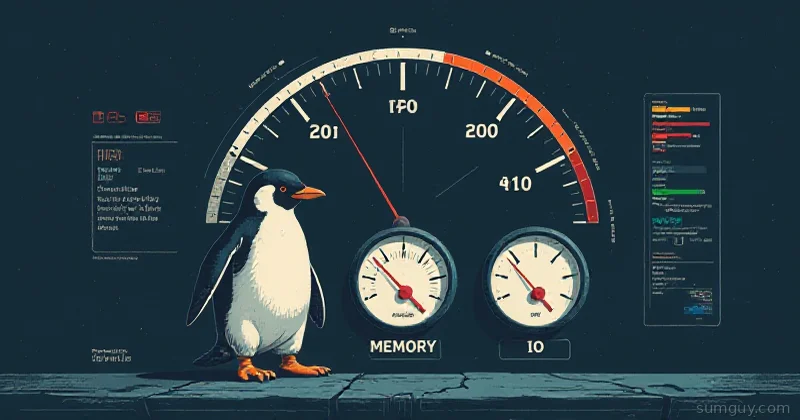
Linux PSI (Pressure Stall Information) exposes real CPU, memory, and IO stall percentages, here's why it beats load average for monitoring.

Build Docker images that run on amd64 and arm64 from one command. QEMU emulation, native multi-node builders, CI caching, and manifest lists explained.
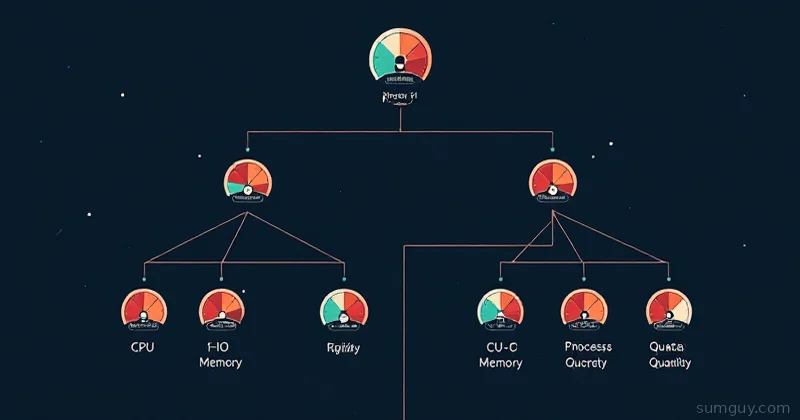
cgroups v2 unified hierarchy explained: read /sys/fs/cgroup/, limit CPU/IO/memory, use systemd slices and PSI pressure files.

runc, crun, and youki all run your containers, but they differ wildly in startup speed, language, and cgroups v2 support. Here's which to pick.

KV cache eats your VRAM at long context, not the weights. Q8/Q4 KV quantization in llama.cpp and vLLM cuts it 2-4x with almost no quality hit.

Dragonfly turns your container registry into a P2P swarm. Stop hammering one registry with 200 nodes pulling 4GB GPU images at once.

Speculative decoding, Gemma 4 MTP, and DeepSeek DSpark all make LLMs 2-6x faster losslessly. How each works, and which to use for local vs. serving.