
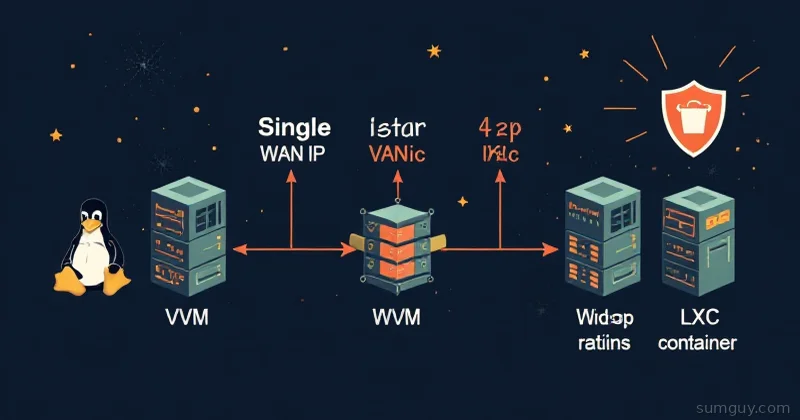
Proxmox NAT Bridge: One IP, Many VMs
·
Updated:
Run multiple Proxmox VMs and LXC containers behind a single public IP using NAT bridging and iptables port forwarding. Works on Proxmox VE 8 and 9.
All the articles with the tag "linux".
Run multiple Proxmox VMs and LXC containers behind a single public IP using NAT bridging and iptables port forwarding. Works on Proxmox VE 8 and 9.
Oh My Zsh had its moment. Here's the 2026 shell setup: Starship prompt, three killer plugins, and when to consider Fish or Nushell.

MySQL 8.0 broke auth, MariaDB forked hard, and Docker changed how you connect. Here's what still works and what'll bite you.

Learn systemd socket activation to start services on-demand, save RAM, and cut boot time. Includes .socket unit files, real examples, and testing with systemd-socket-activate.
Master bulk file renaming on Linux with rename, vidir, fd, and mmv. The right tool for every scenario from regex rewrites to visual editing.

du and df still work, but Rust-era tools like dust, duf, and fclones make disk triage faster and way less painful in 2026.

zstd -3 compresses 4-6x faster than gzip at a better ratio. Measured numbers, where xz still wins at the high end, and how to use zstd in 2026.

Linux suspend vs hibernate explained: sleep states, swap setup, initramfs resume hook, wake-on-LAN, lid close behavior, and fixing common hibernate failures on modern Linux systems.

Your Linux box has hundreds of kernel knobs in /proc/sys that nobody ever touches. Most do not matter. Here are the handful that actually improve a Docker host.

Learn VLAN basics for your home lab: 802.1Q tagging, trunk vs access ports, managed switch setup, and pfSense VLAN configuration to isolate IoT, guests, and your NAS.

Hide your SSH port from scanners with port knocking. It's not a replacement for security, but it's a valid defense-in-depth tactic.

PipeWire replaced PulseAudio and ALSA routing on every major distro. Here's the new audio stack, CLI tools, and how to fix the annoying stuff.