Posts
Page 34 of 76
-
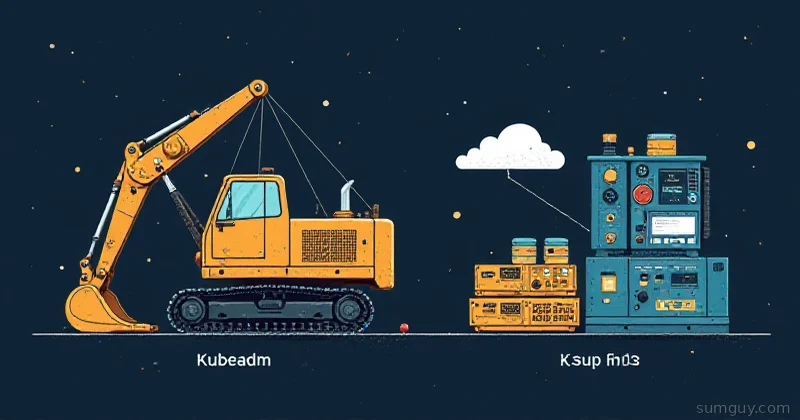
k3sup vs kubeadm for Homelab Clusters
kubeadm is the official Kubernetes bootstrapper. k3sup is a one-shot SSH installer for k3s. Here's which one to use for your homelab cluster.
11 min read -
Dead Container Took Down Prod
A real postmortem: how a forgotten survey-tool container, an uncapped Docker log driver, and rootless networking combined to kill prod for a Monday morning.
12 min read -
Mikrotik RouterOS for Home Lab
Mikrotik routers cost $50, run a real OS, and humiliate prosumer gear. RouterOS basics, VLANs, firewalling, and why your homelab probably needs one of these.
16 min read -
Dell R720 vs HP DL380 G9: Used Server Knife Fight
Dell R720 or HP DL380 G9 for your home lab? We compare CPU generation, power draw, fan noise levels, iDRAC vs iLO, and which used pizza box wins the fight.
13 min read -
etcd vs Consul vs ZooKeeper Coordination
etcd powers Kubernetes. Consul is the service-discovery Swiss army knife. ZooKeeper is the grizzled veteran. Here's how to pick a coordination store.
13 min read -
pfSense vs OPNsense in 2026
Two FreeBSD firewall distros, one bitter fork. pfSense vs OPNsense in 2026, which one to pick for your home lab, and why the licensing drama still matters.
11 min read -
FastAPI vs Flask vs Django Picked Right
FastAPI is async and type-driven. Flask is the micro-framework. Django is batteries-included. Here's how to pick for homelab apps and small SaaS.
13 min read -
NVMe Heatsinks That Actually Cool
NVMe drives throttle hard at 70-85C. Here is how to monitor temps, intentionally trigger throttling to confirm it, and pick a heatsink that fixes the issue.
12 min read -
Zeek for Home Lab Forensics
Zeek (formerly Bro) turns network traffic into structured logs you can actually query. The IDS that doesn't shout, it documents. Setup and use in a home lab.
11 min read -
Neo4j vs ArangoDB: Graph DB Showdown
Neo4j is the household graph DB with Cypher. ArangoDB is multi-model with AQL and free clustering. Here's which one fits your homelab graph use case.
10 min read -
SAS vs SATA in 2026: When SAS Still Wins
SAS drives are not dead, they are cheap on eBay right now. Here is exactly when used SAS3 hardware beats SATA for home lab storage builds on a budget.
11 min read -
ModSecurity vs Coraza WAF
ModSecurity 3 is end-of-life and Coraza is the open-source successor, Go-native, faster, and friendlier. Here's the migration story and what actually changes.
12 min read